

Are You Mad At Me?
New podcast episode on people-pleasing, fawning, and the grief that it stirs up.

Last November I was vacationing with my friends Jenna and Laura in Florida. They’re both IFS therapists, and we were sitting on the beach reading sections from Meg Josephson’s book Are You Mad at Me? out loud.
Every few pages we’d stop because we were all so triggered. We’d read a passage and then start talking about what it was bringing up for each of us. At one point we realized, Wait… is this an IFS book?
It isn’t officially. But it definitely felt familiar.
When Meg and I chatted on the podcast this week, I told her right away that her book was “the most triggering book I’ve ever read.” I meant that in the nicest possible way. She took it as a huge compliment and loved that it spurred great conversation on our girls’ trip
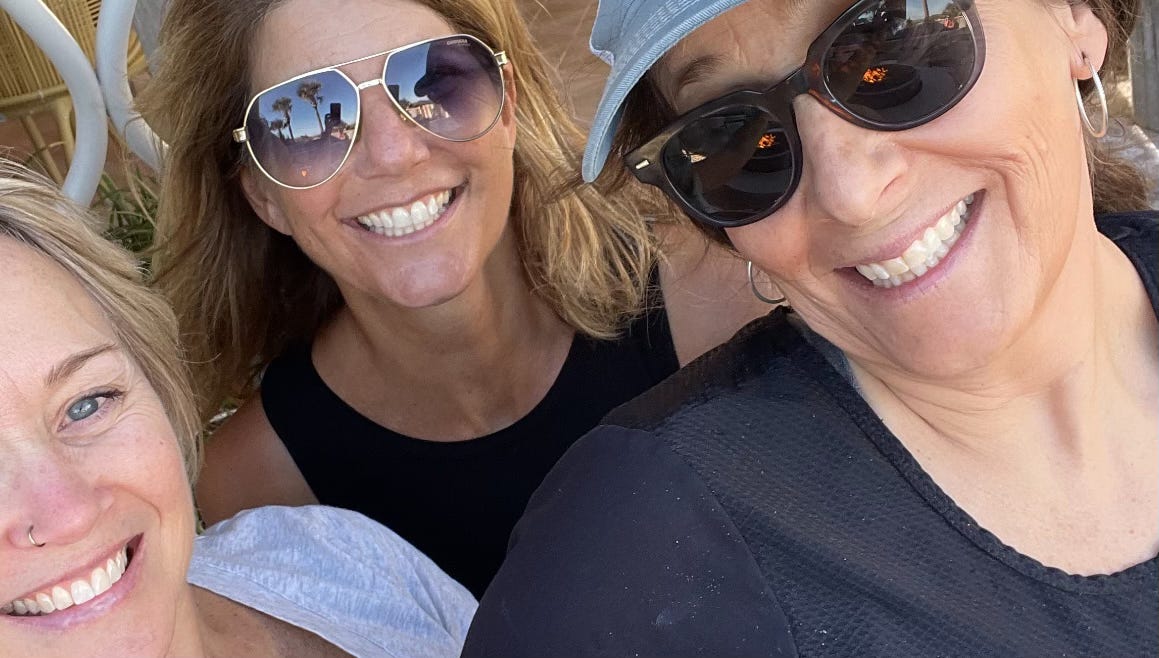
.One of the things Meg and I talked about in this episode is that question so many of us hear inside: Are you mad at me? Meg points out that it’s not really a question, but more of a feeling.
I know that feeling in my own system. It’s like there’s a part of me that’s always tracking. Did I say something wrong? Did I do something wrong? Is someone upset with me?
I told Meg a story that still activates a part in me, just a little. I remembered a night when a friend was over and we were deciding what to eat. I really wanted rice, and he didn’t. Instead of saying what I actually wanted, I just went along with what he wanted. Then I spent the rest of the evening feeling resentful and kind of pouty.
Later I remember thinking, Why didn’t you just say you wanted the rice?
It sounds like such a silly thing, but that moment is a snapshot of how my system often works. There’s a part of me that thinks if I have a need, I might get in trouble. Or someone might get mad at me. So it feels safer to just not have needs at all.
Meg and I also talked about grief and anger, which are coming up a lot in my life right now. So often our parts do the same thing over and over, hoping this time will be different. If I just do more, maybe this person will finally see me or understand me. Letting ourselves feel grief can challenge that cycle. It’s painful, but it can also be freeing. Here’s a clip from the episode:
Another piece of our conversation was about mindfulness and slowing things down. That energy that comes with people-pleasing can make it really hard to know what we actually want or need. Awareness helps us pause long enough to notice what’s happening inside.
One thing Meg said that I really loved: “Presence isn’t feeling good. It’s seeing what’s there.” That felt very “IFS” to me.
If you’ve ever noticed that part of you that’s scanning for signs that someone might be upset with you… or that part that just wants to keep the peace… I think you’ll get a lot from this conversation.
You can listen to the full episode here, or where you listen to podcasts.

Fawning is a form of control.
That's still hard to say out loud. Which is exactly how I know it's true.
It looks passive, submissive, even accommodating. But underneath that well crafted mask is coercion — a strategy for getting what I want without ever admitting I want it.
I spent decades doing it without knowing I was doing it. Performing agreeableness. Managing the room. Keeping people close by making myself easy to keep.
Learning to interrupt that — to just say what I actually want in the moment — has been some of the hardest work I've done. Because it requires the thing Meg names so precisely.
Surrender.